
PRP Hair Treatment in Islamabad
PRP hair treatment separates platelet-rich plasma from a small blood sample and injects it into selected scalp areas. Research suggests possible improvement in hair density for some patients with androgenetic alopecia, but studies use different protocols and evidence quality is limited. Diagnosis and baseline assessment should come before treatment.
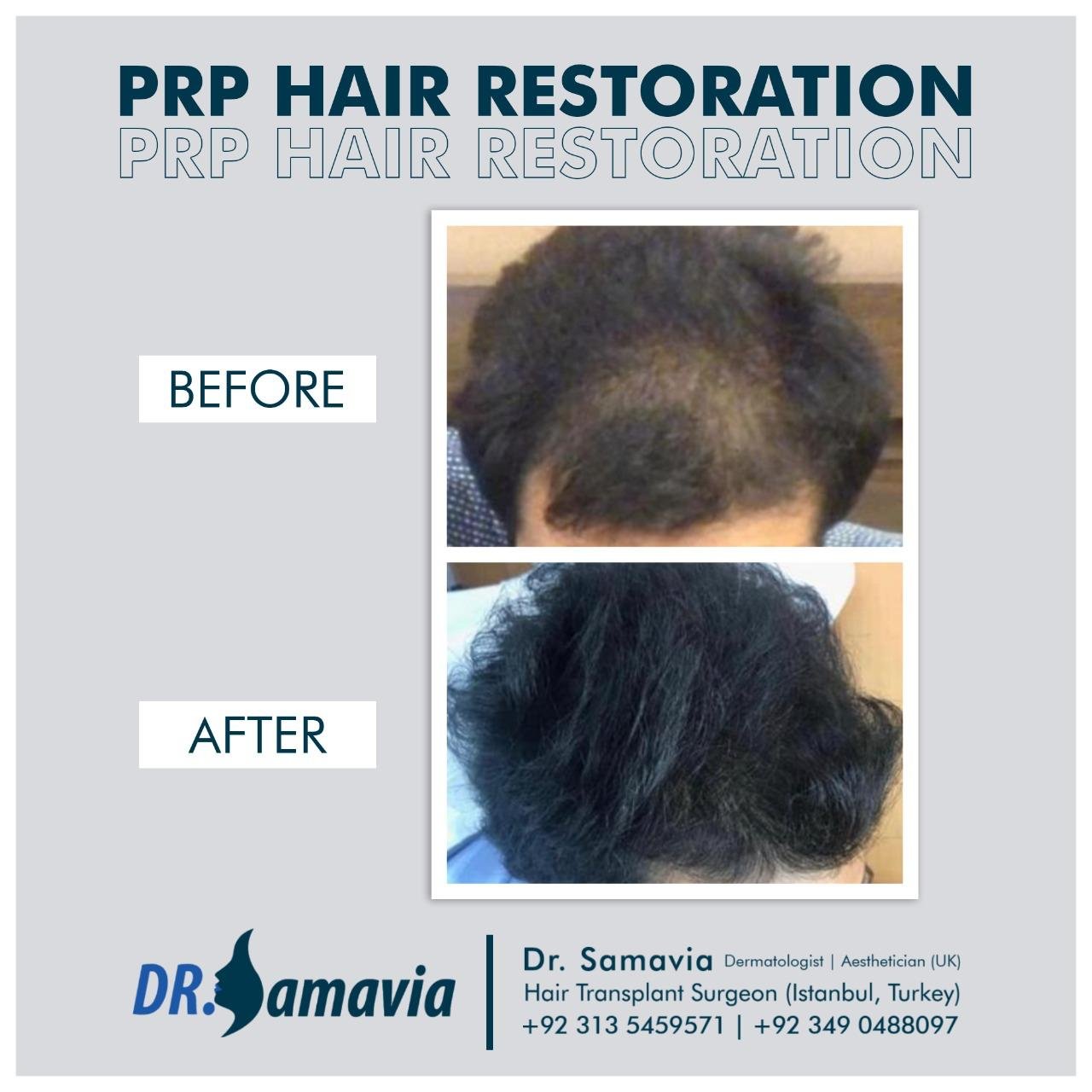
What is PRP Hair Treatment?
PRP (Platelet-Rich Plasma) therapy is a regenerative treatment that uses a concentrated portion of the patient’s own blood to support hair follicle activity and improve overall hair quality.
During the procedure, a small blood sample is collected and placed in a centrifuge, which separates the platelet-rich plasma from other blood components. This plasma contains a high concentration of platelets and naturally occurring growth factors that play an important role in tissue repair, cell communication, and regeneration.
The prepared PRP is then carefully injected into targeted areas of the scalp. These growth factors may help stimulate weakened hair follicles, support the natural hair growth cycle, and improve hair density, thickness, and strength in suitable patients.
What Is PRP Hair Treatment Used For?
PRP is a treatment that is applied for thinning hair, especially as a result of androgenetic alopecia, mostly known as male pattern hair loss. PRP helps to prevent hair loss and to strengthen weak hair. PRP may also be applied after hair transplantation performed at Face Time Clinic by Dr. Samavia to enhance the hair transplantation results.
PRP treatment is preferred by many patients as it helps the post-operative healing process as well as positively affects hair growth and hair thickness after hair transplant operations.
A Personalized Approach to PRP Hair Treatment
Hair loss can occur for many different reasons, and PRP Hair Treatment is not suitable for every patient or every type of hair loss. Before recommending treatment, Dr. Samavia evaluates the patient's pattern and duration of hair loss, scalp condition, existing hair density, degree of follicular miniaturisation, medical history, current medications, previous treatments and other factors that may be contributing to ongoing thinning or shedding.
The first priority is to establish the likely cause of hair loss and determine whether viable hair follicles are still present in the affected areas. Conditions such as androgenetic alopecia, nutritional deficiencies, thyroid-related hair loss, inflammatory scalp disorders, autoimmune conditions and temporary shedding may require different treatment strategies.
If PRP is considered appropriate, Dr. Samavia develops an individual hair-restoration plan rather than using the same treatment package for every patient. Depending on the diagnosis, the plan may include PRP Hair Treatment together with clinically appropriate medical management, correction of identified nutritional deficiencies, scalp and hair-care guidance, other suitable hair-restoration treatments and scheduled follow-up.
PRP may be particularly considered in selected patients with early or moderate hair thinning where functioning follicles are still present. It should not be expected to create new hair follicles or reliably restore areas of advanced baldness where follicles have been permanently lost. In such situations, hair transplantation or another hair-restoration strategy may be more appropriate.
Monitoring Hair Treatment Progress
Hair-growth treatments develop gradually and should be evaluated objectively rather than judged immediately after a treatment session.
Where appropriate, baseline clinical photographs, scalp examination, hair-density assessment or trichoscopic measurements may be used to document the patient's starting condition and monitor changes during follow-up.
Dr. Samavia reviews patient progress as part of the ongoing treatment process. Follow-up helps assess whether shedding, hair density and overall hair quality are changing and whether the treatment plan should be continued, modified or combined with another clinically appropriate approach.
Because PRP preparation methods, treatment schedules and individual responses vary, there is no single protocol that produces the same outcome for every patient. The number and frequency of sessions are therefore planned according to the patient's diagnosis, clinical findings, response to treatment and long-term hair-restoration goals rather than a guaranteed fixed formula.
Patients also receive personalised guidance regarding preparation, scalp care, activity after treatment, medications where clinically appropriate and follow-up. Following the recommended treatment and hair-care plan can support the best possible outcome for the individual patient, although the degree of improvement varies from person to person.
If you are considering PRP Hair Treatment in Islamabad, you can book a consultation with Dr. Samavia for an individual hair-loss assessment and personalised hair-restoration plan.
What concerns can it address?
PRP may be discussed for selected adults with early or moderate pattern hair loss and viable follicles. It is less likely to help where follicles are permanently destroyed or the underlying cause remains untreated.
Potential benefits
- Uses material prepared from the patient's own blood.
- Non-surgical and usually has short recovery.
- Some controlled studies report improved density in androgenetic alopecia.
Limitations and realistic expectations
PRP is not a cure, does not create new follicles and cannot guarantee visible thickening. Research is heterogeneous, protocols differ and maintenance may be needed. It should not replace diagnosis or established treatment when those are indicated.
Who may be suitable?
Suitability depends on the diagnosis, scalp condition, blood and platelet health, medical history, medication and expectations. Baseline photographs or measurements may be used to judge change.
Who may not be suitable?
PRP may be unsuitable or postponed with active scalp infection, some blood or platelet disorders, significant anaemia, uncontrolled illness or medicines that affect bleeding. Pregnancy and other individual factors require clinician review.
How to prepare
Disclose medicines, supplements, bleeding problems and recent illness. Follow clinic instructions about hydration, hair washing and medicines. Do not stop prescribed anticoagulant or other medicine without the prescribing clinician's advice.
How the procedure works
- Confirm diagnosis and treatment area.
- Draw a small blood sample.
- Prepare PRP using the clinic protocol.
- Clean the scalp and inject at planned points.
- Provide aftercare and schedule review.
Results and treatment timeline
Change is gradual and usually judged with standardised photographs or measurements over several months. Some people notice reduced shedding or improved density; others see little change. Hair-cycle timing makes early promises unreliable.
Risks and side effects
Temporary pain, tenderness, pinpoint bleeding, bruising, swelling, headache or itching can occur. Infection, nerve or vessel injury and scarring are less common potential complications of scalp injections.
Recovery and aftercare
Follow the supplied hair-washing, exercise and product instructions. Avoid rubbing or adding unapproved scalp products during early recovery. Contact the clinic for worsening pain, swelling, discharge, fever or another unexpected symptom.
Alternatives and comparisons
Alternatives depend on diagnosis and may include observation, prescribed medical treatment, low-level laser therapy, camouflage, scalp micropigmentation or hair transplantation. PRP may sometimes be used alongside rather than instead of another plan.
What affects the cost?
Cost depends on the number of planned sessions, preparation protocol and whether assessment or other treatments are included. A course should be recommended only after diagnosis and discussion of uncertain response.
Patient experiences
Reviews describe individual experiences and do not predict another patient's result.
I had a wonderful experience consulting with Dr. Samaviya Ejaz. She is an incredibly impressive and professional dermatologist. Her clinic is beautiful and has a calming atmosphere.
Umar Shah
Read on GoogleI had my hair fall consultation with Dr Samavia. She thoroughly explained the treatment. After PRF sessions my hair fall stopped and density improved. Highly recommend.
Moneeb Mumtaz
Read on GoogleI have had a few treatments at this clinic and I am happy with the outcomes. Dr. Samavia and her team are kind, professional, and trustworthy.
Sheikh Yousuf Kareem
Read on GoogleVisit Dr Samavia at Facetime Clinic
Use the verified Google profile for clinic directions, business details and linked patient reviews.
Clinical references
- Hair loss: diagnosis and treatmentAmerican Academy of Dermatology · accessed 28 August 2026
- PRP for androgenetic alopecia: systematic review and meta-analysisPubMed · accessed 28 August 2026
PRP Hair Treatment FAQs
Does PRP work for every type of hair loss?
No. Evidence is mainly for selected pattern hair loss, and diagnosis matters. PRP is unlikely to restore follicles that have been permanently destroyed.
How many PRP sessions are needed?
Protocols vary. A clinician may suggest an initial course and later review rather than guaranteeing a fixed number or result.
When can I expect a PRP result?
Hair changes are gradual and are commonly reviewed after several months using consistent photographs or measurements.
Is PRP painful?
Scalp injections can be uncomfortable. Pain-control options may be discussed, and tenderness can continue briefly afterwards.
Can PRP replace hair-loss medicine?
Not necessarily. The best plan depends on diagnosis, evidence, contraindications and preference. PRP may be an adjunct rather than a replacement.
Is there downtime after scalp PRP?
Many people return to routine activity quickly, but tenderness, redness, swelling or pinpoint bleeding can last for a short period.
Other Hair Procedures guides
Discuss PRP Hair Treatment with Dr Samavia
Book a consultation in Islamabad to review suitability, alternatives, expected recovery and individual risks.