
Scalp Micropigmentation in Islamabad
Scalp Micropigmentation (SMP) is a non-surgical cosmetic camouflage procedure in which tiny deposits of pigment are placed into the superficial scalp to create the appearance of closely shaved hair follicles or reduce the visible contrast between thinning hair and the scalp. It may be considered for male or female pattern hair loss, areas of reduced density and selected scalp scars.
SMP does not stimulate hair growth or create new hair follicles. Its purpose is visual camouflage. Results depend on appropriate diagnosis, hair-loss pattern, skin type, pigment selection, hairline design and implantation technique. Published studies report good cosmetic satisfaction in selected patients, although standardized protocols and long-term evidence remain limited.
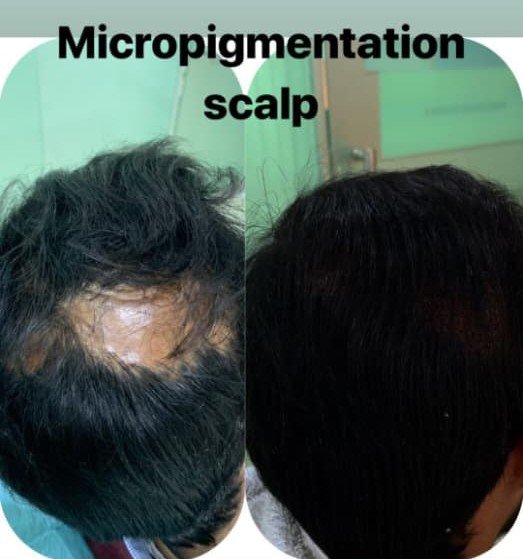
What is Scalp Micropigmentation?
Scalp Micropigmentation (SMP) is a specialised form of cosmetic tattooing designed specifically for the scalp.
During treatment, very small pigment deposits are placed at controlled depths using fine needles. These deposits are arranged to resemble the appearance of natural follicular openings or very short shaved hairs.
For patients who keep their hair very short, SMP can create the visual effect of a closely shaved fuller head of hair.
For patients with longer but thinning hair, pigment can reduce the colour contrast between visible scalp and surrounding hair, producing the appearance of greater density.
Scalp micropigmentation can also be used to camouflage selected scars caused by:
- Previous hair transplantation
- FUT or strip surgery
- FUE harvesting
- Trauma
- Previous scalp surgery
- Certain stable forms of alopecia
SMP is fundamentally a camouflage treatment rather than a biological hair-restoration treatment. Published medical literature describes it as a tattoo-based method that creates the illusion of increased hair density.
What Is Scalp Micropigmentation Used For?
Scalp micropigmentation may be considered for selected patients with:
- Male pattern baldness
- Female pattern hair thinning
- Receding hairline
- Diffuse-looking scalp visibility
- Crown thinning
- Advanced baldness with a shaved hairstyle
- Hair-transplant scars
- Selected scalp scars
- Stable scarring alopecia
- Certain localized areas of hair loss
For patients with advanced male pattern hair loss, SMP may be used to reproduce the appearance of a shaved hairline and short scalp stubble.
For patients who still have existing hair, treatment can sometimes reduce visible scalp contrast so that the hair appears cosmetically denser.
SMP may also complement hair transplantation when transplanted density is limited or a donor scar remains visible.
It should not replace investigation of unexplained, sudden or progressive hair loss.
A Personalized Approach to Scalp Micropigmentation
Scalp Micropigmentation is not a hair-growth treatment, and the best result depends heavily on appropriate patient selection, scalp condition, hair-loss pattern, skin tone, existing hair, pigment selection and long-term design planning. SMP creates the visual appearance of hair follicles or reduces the contrast between thinning hair and the scalp, but it does not create new follicles or stop progressive hair loss.
Before recommending Scalp Micropigmentation, Dr. Samavia assesses each patient individually, reviewing the pattern and stability of hair loss, existing hair density, scalp health, skin type, previous hair-restoration procedures, scars, medical history and the patient's cosmetic goals. Unexplained, rapidly progressive or inflammatory hair loss should be appropriately assessed before cosmetic camouflage is planned.
The treatment design is then personalised according to the patient's individual appearance and expected long-term hair-loss pattern. This may include careful planning of the hairline height and shape, temple design, pigment shade, treatment density, scalp skin tone, natural hair colour and areas requiring camouflage.
Long-term planning is particularly important because natural hair may continue to thin while SMP pigment remains visible. An excessively low, dark or aggressive hairline can therefore become less natural as hair loss progresses. The goal is to create a conservative and balanced appearance that remains appropriate as the patient's hair pattern changes over time.
For patients with thinning hair, SMP may be used to reduce visible scalp contrast and create the appearance of greater density. For patients with advanced baldness who prefer a closely shaved appearance, treatment may be designed to imitate short follicular stubble. SMP may also be considered for selected FUT scars, FUE donor scars, surgical scars or areas of residual scalp visibility after hair transplantation.
Depending on the individual case, the wider hair-restoration plan may also include medical treatment for ongoing hair loss, PRP or PRF therapy, hair transplantation, scalp-care guidance or continued monitoring. SMP may therefore be used alone or as part of a broader hair-restoration strategy.
Monitoring and Refining the SMP Result
Scalp Micropigmentation is usually developed gradually rather than attempting maximum darkness or density during the first treatment session.
After each session, Dr. Samavia reviews healing, pigment retention, colour balance, hairline appearance and overall density before deciding whether further refinement is required. Additional sessions may be used to build density, soften transitions or improve visual balance once the scalp has healed.
Where appropriate, baseline and follow-up clinical photographs may be used to document the appearance before treatment and assess the result over time.
Patients should also understand that SMP pigment can gradually fade or change in appearance because of skin turnover, ultraviolet exposure, immune response and other individual factors. Future touch-up treatment may therefore be required.
Because SMP is pigment-based, unsatisfactory colour, excessive darkness, poor hairline design or incorrect implantation depth can be difficult to correct. Careful planning, conservative treatment and realistic expectations are therefore particularly important before treatment begins.
Patients receive personalised instructions regarding scalp preparation, washing, exercise, sun exposure, sweating, skincare and early aftercare. Following the recommended care plan can support healing and pigment retention, although long-term appearance and fading vary between individuals.
If you are considering Scalp Micropigmentation in Islamabad, you can book a consultation with Dr. Samavia for an individual scalp and hair-loss assessment and a personalised SMP treatment plan.
What concerns can it address?
Scalp micropigmentation may help cosmetically camouflage:
- Visible scalp caused by thinning hair
- Receding frontal hairline
- Temporal recession
- Crown or vertex thinning
- General pattern baldness
- Low visual density after hair transplantation
- FUT linear scars
- Selected FUE donor scars
- Stable scars caused by injury or surgery
- Certain stable alopecia-related areas
The procedure works by altering visual perception rather than increasing the actual number of hairs.
Patients with very light, grey, red or unusually coloured hair may require particularly careful pigment selection and expectation management.
Potential benefits
Potential benefits of SMP include:
- Non-surgical treatment.
- Does not require donor hair.
- Can camouflage advanced hair loss where transplantation may not provide sufficient density.
- Can reduce contrast between hair and visible scalp.
- Can create the appearance of a shaved hairline.
- Can camouflage selected hair-transplant scars.
- Does not require follicular graft harvesting.
- Usually involves less recovery than hair-transplant surgery.
- Can potentially be combined with medical hair-loss treatment or hair transplantation.
Clinical reports and case series have generally reported favourable cosmetic improvement and high patient satisfaction in appropriately selected patients.
Limitations and realistic expectations
Scalp micropigmentation does not grow hair.
It cannot:
- Restore destroyed follicles
- Stop androgenetic alopecia
- Make existing hair biologically thicker
- Replace missing follicles
- Permanently prevent future hair loss
The appearance is produced entirely by deposited pigment.
Close inspection will therefore reveal that SMP dots are pigment rather than actual hair shafts, particularly when there is no surrounding natural hair.
Other limitations include gradual pigment fading, potential colour change and the possibility that future hair loss alters the relationship between the SMP hairline and natural hair.
An excessively low or unnatural hairline can become particularly difficult to correct because the design remains visible even if surrounding natural hair continues to recede.
Results also depend heavily on practitioner technique. Improper depth, pigment selection or distribution can result in dots that appear:
- Too large
- Too dark
- Too uniform
- Blurred
- Blue-grey
- Artificially shaped
Published literature on revision of unsatisfactory SMP emphasizes that poorly performed results can be difficult to correct and may require additional SMP, tattoo-removal treatment or other procedures.
Who may be suitable?
Potential candidates may include adults with:
- Male pattern hair loss
- Female pattern hair thinning
- Stable hair-loss patterns
- Advanced baldness who prefer a shaved appearance
- Insufficient donor hair for extensive transplantation
- Visible scalp despite existing hair
- Hair-transplant scars
- Stable surgical or traumatic scalp scars
- Realistic expectations about cosmetic camouflage
Patients considering SMP should understand that the procedure creates the appearance of hair follicles rather than new hair.
The scalp should also be evaluated for active dermatological disease before treatment.
Who may not be suitable?
Treatment may need to be postponed or avoided in patients with:
- Active scalp infection
- Significant active dermatitis
- Active psoriasis in the treatment area
- Open wounds
- Uncontrolled inflammatory scalp disease
- Certain active scarring alopecias
- Unexplained rapidly progressing hair loss
- Significant tendency toward keloid or abnormal scarring
- Known allergy to relevant pigment components
- Significant uncontrolled medical illness
- Poor wound healing
- Unrealistic expectations
Patients with alopecia caused by an active inflammatory or autoimmune disorder should have the condition assessed before cosmetic camouflage is considered.
SMP placed over unstable disease can become cosmetically mismatched if hair loss continues to expand.
How to prepare
Before SMP treatment, inform the practitioner or clinician about:
- Medical conditions
- Current medicines
- Blood-thinning medication
- Allergies
- Previous tattoo reactions
- Skin conditions
- Psoriasis or eczema
- Previous scalp surgery
- Hair transplantation
- Previous SMP
- History of keloid scarring
- Current hair-loss treatments
The scalp and hair-loss pattern should be examined before treatment.
For a shaved SMP appearance, the proposed hairline should be discussed carefully before pigment is placed.
The plan may include:
- Hairline height
- Hairline shape
- Temple design
- Pigment shade
- Density
- Existing hair colour
- Scalp skin tone
- Future hair-loss pattern
Follow the clinic's instructions regarding hair cutting, scalp washing and skincare before treatment.
Do not stop prescribed medication without advice from the clinician responsible for that medication.
How the procedure works
- Scalp and hair-loss assessment:
The practitioner evaluates the pattern of hair loss, existing hair, scalp condition, scars and treatment goals. - Design planning:
The proposed hairline, areas of camouflage and pigment distribution are planned. - Pigment selection:
Pigment is selected to complement the patient's natural hair and skin characteristics. - Scalp preparation:
The treatment area is cleaned and prepared. Pain-control measures may be used where appropriate. - Micropigmentation:
A fine needle deposits small pigment points into controlled superficial layers of the scalp. - Density building:
Pigment is distributed gradually rather than attempting maximum darkness during the first treatment. - Additional sessions:
Further sessions may be performed after healing to refine density, colour balance or hairline appearance. - Aftercare:
The patient receives scalp-care instructions for the early healing period.
Natural-looking SMP depends on appropriate dot size, depth, colour, spacing and randomised distribution that resembles natural follicular patterns.
Results and treatment timeline
SMP creates an immediate visual effect because pigment is deposited during treatment.
However, the scalp may initially appear:
- Red
- Slightly swollen
- Darker than the intended final appearance
As redness resolves and the superficial skin heals, the appearance becomes easier to judge.
First several days
Mild redness, tenderness or small superficial crusts may occur.
First few weeks
The pigment appearance may soften as the scalp heals.
After subsequent sessions
Additional pigment may be used to build density, balance uneven areas and refine the overall appearance.
Longer term
Pigment may gradually fade as a result of skin turnover, immune response, ultraviolet exposure and other individual factors.
Recent clinical research continues to show cosmetic benefit but also demonstrates measurable fading over follow-up, particularly in some scarred scalp areas. Long-term pigment retention remains an area where further study is needed.
Touch-up treatment may therefore be required in the future.
Risks and side effects
Temporary effects may include:
- Scalp redness
- Tenderness
- Mild swelling
- Small superficial crusts
- Itching
- Temporary sensitivity
Other potential complications include:
- Infection
- Allergic or inflammatory reaction to pigment
- Uneven pigment deposition
- Pigment migration or blurring
- Unnatural dot size
- Incorrect pigment colour
- Blue, grey or other unwanted colour change
- Patchy fading
- Poor hairline design
- Scarring
- Keloid formation in susceptible patients
- Unsatisfactory cosmetic appearance
Because SMP is tattoo-based, removing or correcting unwanted pigment can be considerably more difficult than performing the initial treatment.
Patients should therefore avoid choosing a very aggressive hairline, excessive darkness or unrealistic density during initial treatment.
Recovery and aftercare
Recovery is generally shorter than recovery from surgical hair transplantation.
Follow the specific aftercare instructions provided by the clinic.
Patients may be advised for a short period to:
- Avoid rubbing or scratching the scalp.
- Avoid picking superficial crusts.
- Follow instructions regarding scalp washing.
- Avoid excessive sweating.
- Avoid strenuous exercise if instructed.
- Avoid swimming.
- Avoid sauna or steam exposure.
- Limit unnecessary direct sun exposure.
- Avoid unapproved scalp products.
Long-term sun exposure can contribute to pigment fading, so appropriate scalp sun protection may be helpful once healing is complete.
Contact the clinic if you develop:
- Increasing pain
- Significant swelling
- Spreading redness
- Pus or discharge
- Fever
- Persistent bleeding
- Severe itching or rash
- Another unexpected reaction
Alternatives and comparisons
Alternatives depend on the diagnosis, degree of hair loss and treatment goals.
Options may include:
- Medical treatment for androgenetic alopecia
- PRP hair treatment
- PRF hair treatment
- Low-level laser therapy
- Hair fibres or camouflage products
- Hair systems
- FUE hair transplantation
- DHI implantation
- FUT hair transplantation
- Observation
Scalp Micropigmentation vs Hair Transplant
A hair transplant moves real follicular units from a donor area to an area of hair loss. Successfully transplanted follicles can then grow actual hair.
Scalp micropigmentation places pigment into the scalp to imitate follicles or decrease visible scalp contrast.
SMP therefore does not require donor follicles but also does not produce actual hair growth.
Scalp Micropigmentation vs PRP or PRF
PRP and PRF involve blood-derived preparations injected into the scalp with the aim of supporting existing follicles.
SMP does not biologically stimulate follicles. It provides cosmetic camouflage regardless of whether new hair grows.
SMP After Hair Transplant
SMP may sometimes be used after hair transplantation to camouflage:
- Residual scalp visibility
- FUT scars
- Selected FUE scars
- Areas where transplanted density remains cosmetically limited
The timing should be determined after adequate healing from hair-transplant surgery.
What affects the cost?
The cost of scalp micropigmentation can depend on:
- Size of the treatment area
- Degree of hair loss
- Number of sessions
- Hairline reconstruction required
- Existing hair density
- Scar camouflage requirements
- Previous SMP requiring correction
- Complexity of pigment matching
- Practitioner experience
- Future touch-up requirements
A small scar treatment will generally require a different amount of work from complete scalp coverage for advanced baldness.
Treatment should be planned according to the desired long-term appearance rather than simply applying the maximum amount of pigment in one session.
Patient experiences
Reviews describe individual experiences and do not predict another patient's result.
I had a wonderful experience consulting with Dr. Samaviya Ejaz. She is an incredibly impressive and professional dermatologist. Her clinic is beautiful and has a calming atmosphere.
Umar Shah
Read on GoogleI had my hair fall consultation with Dr Samavia. She thoroughly explained the treatment. After PRF sessions my hair fall stopped and density improved. Highly recommend.
Moneeb Mumtaz
Read on GoogleI have had a few treatments at this clinic and I am happy with the outcomes. Dr. Samavia and her team are kind, professional, and trustworthy.
Sheikh Yousuf Kareem
Read on GoogleVisit Dr Samavia at Facetime Clinic
Use the verified Google profile for clinic directions, business details and linked patient reviews.
Clinical references
- Scalp micropigmentation: a useful treatment for hair lossFacial Plastic Surgery Clinics of North America / PubMed · accessed 29 August 2026
- Natural results of scalp micropigmentation: A reviewJournal of Cosmetic Dermatology / PubMed · accessed 29 August 2026
- Scalp Micropigmentation Procedure: A Useful Procedure for Hair RestorationJournal of Craniofacial Surgery / PubMed · accessed 29 August 2026
- Standardization of SMP Procedure and Its Impact On OutcomeJournal of Cutaneous and Aesthetic Surgery / PubMed · accessed 29 August 2026
- Revision for unsatisfactory outcomes of scalp micropigmentationInternational Journal of Dermatology / PubMed · accessed 29 August 2026
- Scalp Micropigmentation Is an Effective Treatment for Localized Alopecia: Technical Analysis and a Series of Ten Case ReportsJournal of Cosmetic Dermatology / PubMed · accessed 29 August 2026
Scalp Micropigmentation FAQs
Does scalp micropigmentation grow hair?
No. SMP does not stimulate follicles or grow new hair. It places small pigment deposits into the scalp to imitate the appearance of short hair follicles or reduce the contrast between existing hair and visible scalp.
Is scalp micropigmentation permanent?
SMP is long-lasting but should not be considered permanently unchanged. Pigment can gradually fade or alter over time due to skin characteristics, ultraviolet exposure and other factors. Some patients require future touch-up sessions to maintain the desired appearance.
How many scalp micropigmentation sessions are needed?
SMP is commonly built gradually over multiple appointments rather than completed with maximum pigment density in one session. Many patients receive approximately two to three or more sessions, although the actual number depends on scalp coverage, scar tissue, pigment retention and the desired result.
Does scalp micropigmentation look like real hair?
When appropriately designed and performed, small pigment impressions can resemble the appearance of closely shaved follicles and can reduce scalp visibility among thinning hair. However, SMP remains pigment rather than actual three-dimensional hair, so realistic design and expectations are important.
Can SMP cover hair-transplant scars?
Yes, selected FUT linear scars and FUE donor scars may be camouflaged with SMP. Results depend on the colour, texture and thickness of the scar and surrounding hair. Scar tissue may retain pigment differently from normal scalp skin, so more than one treatment session may be necessary.
Which is better: scalp micropigmentation or a hair transplant?
Neither treatment is automatically better. A hair transplant provides actual growing follicles but requires adequate donor hair and surgery. SMP requires no donor grafts and can provide cosmetic coverage even with advanced hair loss, but it does not grow real hair. The most suitable option depends on the patient's hair-loss pattern, donor supply, hairstyle and treatment goals.
Other Hair Procedures guides
Book a consultation in Islamabad to review suitability, alternatives, expected recovery and individual risks.